
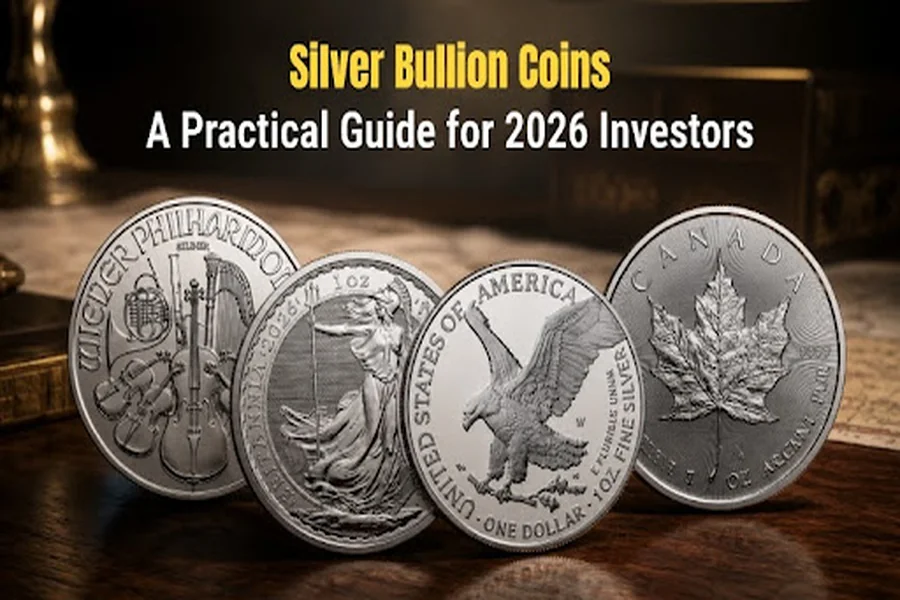

It has been a wild ride for physical silver over the last few years, one that saw it hit all-time highs, correct and then back up in a steady climb. In all of that, silver bullion coins have been one of the easiest and most readily liquidated methods for any average investor to have direct holdings in silver. It’s important to know what is meant by the term “bullion coin” before you include them in a portfolio, as well as knowing the coins available and what is truly important when choosing between them.
What Makes a Coin “Bullion,” Not Just Silver
Not all silver coins are created equal. A bullion coin is a coin that is minted by a national mint, is guaranteed by the national mint’s guarantee, and is primarily worth for its metal content, rather than for its collectible rareness. That’s the critical difference between numismatic coins, which can sell for much more than the metal value depending on age, mintage and condition.
- The investment-grade silver coins tend to have a few common characteristics:
- High fineness (nearly always .999 or .9999 pure silver)
- Standardized weight, most frequently 1 troy ounce, which makes it easy to compare prices
- Legal tender in the country of issue, although not necessarily spent at face value by anybody.
- The fact that they are widely accepted and easily resold in any part of the world because of the backing of the sovereign.
It’s the government guarantee that matters. That’s why a major minted silver coin will move quicker with tighter spreads than an unbranded silver round of the same weight.
Why Investors Choose Coins Over Other Silver Products
Bars will cost less per ounce and rounds will break the difference – why go for coins if they are too expensive?
- No counterparty risk. The metal is yours and you do not have an issuer or institution in between.
- Recognized everywhere. A coin from a sovereign mint does not require any explanation at any dealer counter, anywhere.
- An actual inflation hedge. In times of currency devaluation, over long periods of time, silver has not lost its purchasing power.
- Diversification. Precious metals don’t follow the same trend as stocks and bonds; they do not balance out the volatility of a portfolio over time.
- Resale liquidity. Buyers trust coins from well-known mints on sight, which means that they are typically the quickest coins to sell in a dealer’s case.
The price is higher per ounce than for a regular bar of gold, but it’s worth the trade for trust and liquidity. For most investors willing to invest for the long term, that premium is worth it.
The Coins That Dominate the Global Market
The vast majority of silver coin investment demand comes from a small number of sovereign mints:
- American Silver Eagle — The U.S. Mint’s popular one troy ounce .999 fine silver coin. It features one of the most well-known designs in American coinage, the Walking Liberty, and is one of the most popular bullion coins in the world today.
- Canadian Silver Maple Leaf – is available at a .9999 purity level, a step up from the Eagle, and features some of the most advanced anti-counterfealing technology that makes it more difficult to counterfeit than most competing products.
- The Austrian Silver Philharmonic – is the most popular silver bullion coin in the EU markets, based on the Vienna Philharmonic Orchestra, and it is well recognised throughout EU markets.
- British Silver Britannia — This type of silver was used to make coins for the Royal Mint and has a long design history associated with the personification of the British nation, which is prominent in the recent years when the Royal Mint has used rotating security features for this gold alloy.
- Australian Silver Kangaroo — The Perth Mint has produced silver with kangaroo designs nearly every year since it was first created, and collectors demand these coins for both their collectibles and investment qualities.
All of these will be easily resold by good dealers and the differences are mainly in the premium, design preference, and the markets which one might wish to resell into. When you’re considering multiple options at once, it’s wise to explore a dealer’s inventory of all silver coins to determine availability, mint premiums and other factors at your disposal before you pick a place to start.
What Actually Matters When You’re Choosing
After choosing coins over bars, the choice is reduced to a few practical considerations:
- Premium over spot. This is your single most important contributor to your real cost. Premiums have been influenced by demand, mint capacity and the overall tightness of silver valuables, and the supply which is so well documented for 2026 has held premiums up more typical than usual.
- The coins have slightly higher silver content per coin than the .999 coins (like the Eagle), but the difference is negligible for most investors (Purity .9999 vs .999).
- Mint reputation. The coins from well-known sovereign mints have better second hand value and sell quicker than coins from smaller or less well known mints.
- Liquidity. Be careful to deal in coins that have a strong second market — the bigger the position, the more it counts.
- Storage and security. If you’re purchasing coins in bulk, consider the relative space a bag of coins will occupy as compared to the equivalent value in larger bars.
Getting Started Without Overpaying
There are a few patterns that make the difference between successful first-time home buyers and those who suffer a burn:
Discover the fundamental elements of authentication, such as weight, size, and how genuine silver will react to a magnet test or sound test. Only purchase from dealers who have a proven history, and pricing is real-time and spot-price related, this is why a platform like BOLD Precious Metals is worthwhile, as you get live spot-price related pricing and bars and coins come from internationally trusted mints and refiners. Before you buy that first ticket, monitor the spot price in the days leading up to the purchase for a while to become familiar with the daily fluctuations in the price, then maintain a straightforward record of what you bought, when and at what premium, it makes the task of tracking performance and filing taxes much easier in the future.
Many investors begin with small investments and carefully diversify into two or three different types of coins, so that they could get a feel for premiums, designs, and dealer experience before investing large sums of money into a single type of coin.
The Bottom Line
Silver bullion coins combine the tangibility of physical metal with the trust of a sovereign guarantee, a combination that’s hard to replicate with any other asset class. They’re not a vehicle for short-term trading; they’re best treated as a long-term diversification holding inside a broader portfolio. With silver’s industrial demand story still playing out and a real supply deficit underpinning the metal, 2026 remains a reasonable time to build that position, just go in with realistic expectations about premiums, storage, and volatility, and buy from a dealer that’s transparent about all three.