
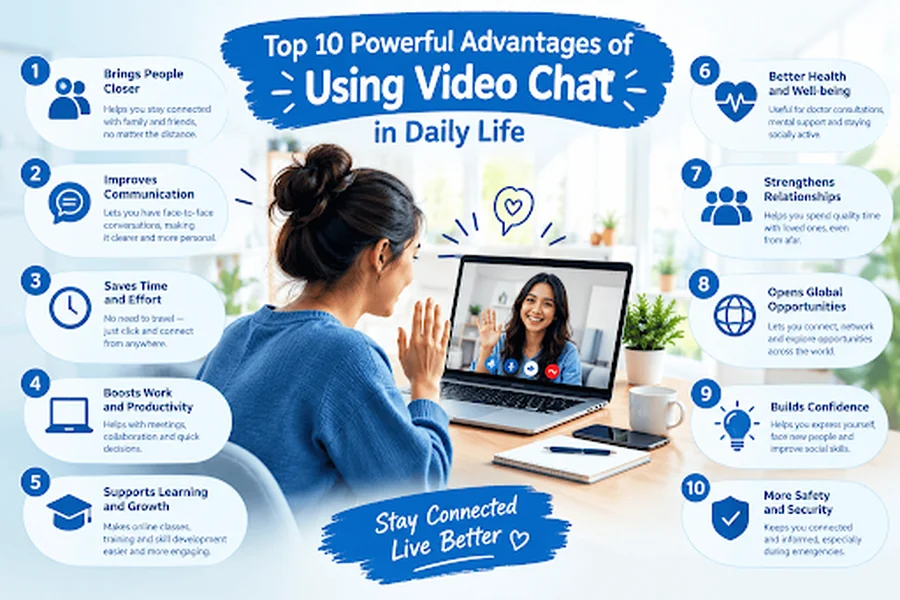

Video chat has quietly become one of the most useful habits in modern life. Whether you want to catch up with a relative overseas, meet people from other cultures, or join a work meeting without leaving home, a live camera feed can do what a text message cannot. Services like Ome TV have made face-to-face conversation with friends and strangers a single click away, which is one reason video calling now shapes everyday routines.
Video chat lets people see and hear each other in real time. This builds trust, saves time and money, reduces loneliness, and makes communication more natural. The ten advantages below show how these benefits appear in family life, work, learning, health, and personal safety.
Why Video Chat Has Become Part of Everyday Life
Text messages and phone calls still matter, but they leave out much of what makes communication meaningful. Facial expressions, tone, and body language carry information that words alone cannot. Video chat restores those cues, which is why so many people now prefer it for important conversations. Below are ten advantages that show how it fits into daily routines.
The Power of Facial Expressions
Communication researchers have long observed that much of what we convey comes from nonverbal cues such as tone, expression, and posture. Voice calls and text strip many of these away. Video keeps them intact. A quick smile or a raised eyebrow can clear up a misunderstanding in seconds, a task that might take a dozen text messages to resolve.
How Eye Contact Builds Trust
Looking at a camera is not identical to looking someone in the eye, but video still lets people read attentiveness and sincerity far better than a written message. This is why many professionals choose video for sensitive conversations, such as feedback sessions or condolences.
If you are looking for a simpler way to start casual conversations without a lengthy sign-up process, CooMeet Video Chat offers a straightforward video chat experience. Treat every session as a real conversation and bring the same courtesy you would show in person.
Personal and Social Advantages
Stronger Family and Friendship Bonds
Distance no longer has to mean drifting apart. A weekly video call with a parent, sibling, or old friend lets you share meals, celebrate milestones, and notice small changes in each other’s lives. Children who grow up with regular video contact with grandparents often form warm, lasting relationships even across continents.
Meeting New People Across Cultures
Video chat opens doors to conversations you would otherwise never have. Talking face to face with someone in another country can challenge stereotypes, teach you about daily life elsewhere, and sharpen your language skills. Platforms such as Ome TV are often used for this kind of casual cultural exchange, though users should always keep conversations respectful.
Less Loneliness and Isolation
Human connection supports emotional well-being, and video makes that connection feel closer than audio alone. For people who live alone, work remotely, or have limited mobility, a regular video call can offer meaningful company and a reminder that someone is listening.
Shared Experiences Without Distance
Video lets you do things together: cook the same recipe, watch a movie in sync, play a board game, or attend a family event from afar. These shared moments create memories that a phone call rarely achieves.
Work, Learning, and Productivity Advantages
Faster Decisions in Teams
Video meetings let teams resolve questions quickly. Instead of waiting hours for email replies, colleagues can discuss an issue, look at the same document on screen, and agree on next steps in one session. Remote and hybrid teams rely on this speed.
Access to Learning and Tutoring
Students can attend lectures, join study groups, and receive one-on-one tutoring from experts anywhere in the world. Seeing a tutor work through a math problem on a shared screen often explains a concept better than written notes alone.
Practicing Confidence and Communication Skills
Speaking on camera is a skill in itself. Regular video practice helps people become comfortable with their posture, pace, and vocal tone. Many learners use casual video conversations to rehearse for interviews or language exams, and some use iFreechet for low-pressure speaking practice before moving to more formal settings.
Health, Money, and Practical Advantages
Saving Time and Travel Costs
A thirty-minute video call can replace a multi-hour trip for a meeting, consultation, or family check-in. The savings in fuel, fares, and time add up quickly, and they also reduce the environmental impact of unnecessary travel. Platforms like Ome TV show how a simple browser connection can replace much of that travel for social contact.
Support for Health and Wellbeing
Telehealth consultations have made it easier for patients to speak with doctors, therapists, and nutritionists without waiting rooms or long commutes. People managing chronic conditions can also check in with care teams regularly. Video is not a substitute for emergency care, but it makes routine support more accessible.
Flexibility for Busy Schedules
Video chat fits into lunch breaks, evenings, and weekends. Parents can attend school meetings from home, freelancers can meet clients in different time zones, and caregivers can stay involved in appointments while managing other responsibilities.
Staying Safe While Video Chatting
Video chat offers real benefits, but safety should come first, especially on platforms that connect strangers.
Protect Your Personal Information
Never share your home address, workplace details, financial information, or passwords during a video call. Be cautious if someone asks for personal details early in a conversation or pressures you to move to another app.
Use Reporting and Blocking Tools
Most reputable video chat services include options to report abusive behavior and block users. Use them immediately if a conversation becomes uncomfortable, and end the call if someone shows explicit content or asks you to do something you are not comfortable with. Services such as Ome TV and iFreechet both provide ways to leave unwanted conversations, and you should check their safety guidelines before you start.
Conclusion
Video chat has become a practical tool for connection, learning, work, and well-being. It helps families stay close, lets students and professionals learn from anywhere, and reduces travel time and costs. The key is to use it thoughtfully: protect your personal information, choose platforms with strong safety features, and treat every conversation with respect. Whether you are reconnecting with loved ones or exploring new perspectives through Ome TV or iFreechet, video chat can make daily life more connected, efficient, and human.