
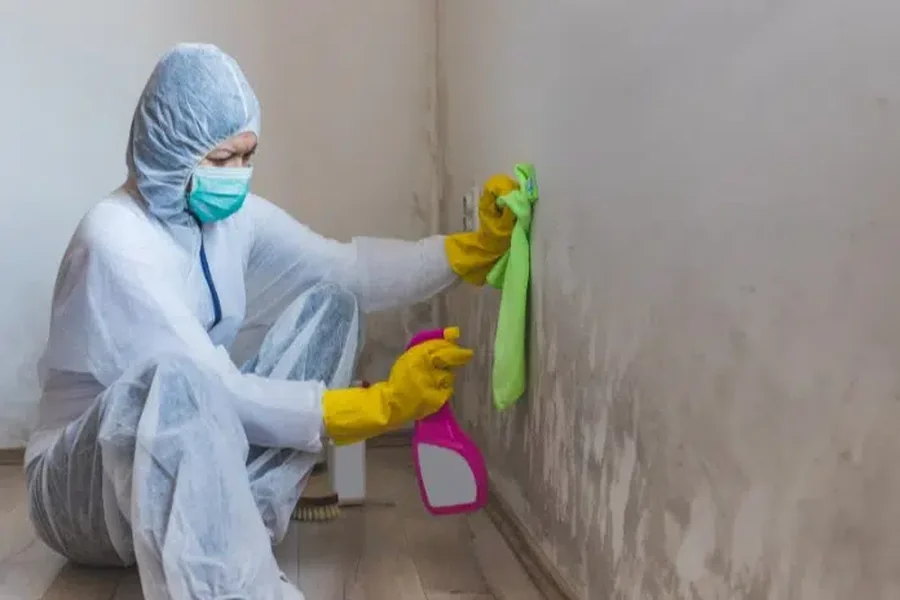

Shiny patches on matte walls get made during cleaning. A smudge you could live with becomes a glossy spot you can’t stop seeing, often after one firm swipe with a damp sponge.
That shine comes from friction. Matte paint looks soft because its surface is microscopically rough, and the roughness scatters light in every direction. Rub it, and those tiny peaks flatten, so the spot starts reflecting light like a small mirror.
Anyone searching for how to clean matte paint walls will find advice about microfiber cloths, mild dish soap, soft sponges, and gentle dabbing. Those tips exist because a matte finish, washable or not, loses its even, velvety look when you rub it. That is why fingerprints, scuffs, and grease marks on matte walls call for restraint, and why some marks are better left to a professional.
Five popular beliefs about matte walls lead to a lot of the damage.
“Matte Paint Can’t Be Washed”
Plenty of homeowners write off matte walls as unwashable, and the belief comes from experience: a cloth, a bit of pressure, a shiny patch. The pressure did that. Washability depends on the formula, and many modern matte paints are built to handle occasional cleaning, unlike older flat paints.
Cure time plays a role. Fresh paint stays soft for a while after it feels dry, so a wall washed too early can scuff more easily than the same wall later on.
Even a washable matte has limits. It tolerates cleaning better than a standard flat, and it still trails satin and semi-gloss, which reflect more light and hide the effects of wiping.
“Scrubbing Harder Gets Stains Out Faster”
Scrubbing mostly speeds up the polishing. Each pass with pressure flattens a little more of the surface texture, so a stubborn spot ends up shinier than it was.
Dirt on a matte wall settles into that texture, which is part of why marks feel stubborn. The same roughness that makes the paint look soft gives grime plenty to hold onto.
Each extra round of effort trades a little more of the finish for a little less of the mark, and the finish is the harder one to get back.
“Melamine Sponges Are Gentle on Paint”
Melamine sponges get recommended for everything, and walls are where that advice goes wrong. The foam behaves like extremely fine sandpaper, which is why it lifts scuffs so well and why it can leave a dull or shiny halo on paint.
Gritty pastes and scouring powders work on the same principle. They remove a thin layer of whatever they touch, and on a painted wall that layer is the finish.
Matte paint shows the result more than glossier paint because the whole point of matte is an even, light-scattering surface. One uneven patch breaks the effect for the entire wall.
“Stronger Cleaner Means a Cleaner Wall”
Bleach, ammonia, and heavy-duty sprays can strip or discolor paint, and matte finishes show that kind of damage plainly. Harsh chemistry also leaves residue, which can attract fresh dirt and dry into streaks.
Water brings its own risks. Moisture that lingers on a matte surface can streak the finish or, in bad cases, bubble it, which is one reason kitchens and bathrooms are often painted in a higher sheen.
The stronger the product, the more of the paint it takes along with the dirt.
“Any Stain Means It’s Time to Repaint”
Dust, fingerprints, and light grease usually respond to gentle handling, and repainting a room over them is overkill.
Some marks do call for more. Crayon, marker, water stains, widespread discoloration, and mold or mildew belong with a professional, and so does any wall where earlier cleaning left uneven patches.
Touch-ups carry their own catch. A dab of fresh matte paint over old paint can show up as a different-looking patch because the surrounding wall has aged, so many painters repaint the whole wall corner to corner.
Why People Choose Matte Anyway
Matte earns its place for good reasons. A flat finish reflects little light, so it hides small wall imperfections like patched seams, roller marks, and slight dents that glossier paints highlight. It also makes deep colors look rich and even, with no glare from windows or lamps.
Walls lit from the side tend to show every ripple in the drywall under a glossy finish, and a matte finish softens that.
That is the trade. The finish that forgives a rough wall asks for care once it is touched, and much of the trouble comes from treating it like a sturdier paint.
Where Matte Walls Wear Fastest
Contact decides how a matte wall ages. The areas around light switches, doorframes, stair rails, and the backs of chairs collect fingerprints and scuffs first, and hallways and kids’ rooms see more of it than bedrooms do. Kitchens add grease and moisture to the mix.
Wear tends to show as small shiny spots exactly where hands and furniture meet the wall, which is the same burnishing effect that cleaning causes. Seen that way, some of the “stains” on matte walls are polish marks.
A matte wall behaves like a suede jacket. It keeps its soft look for as long as nobody rubs it the wrong way.