
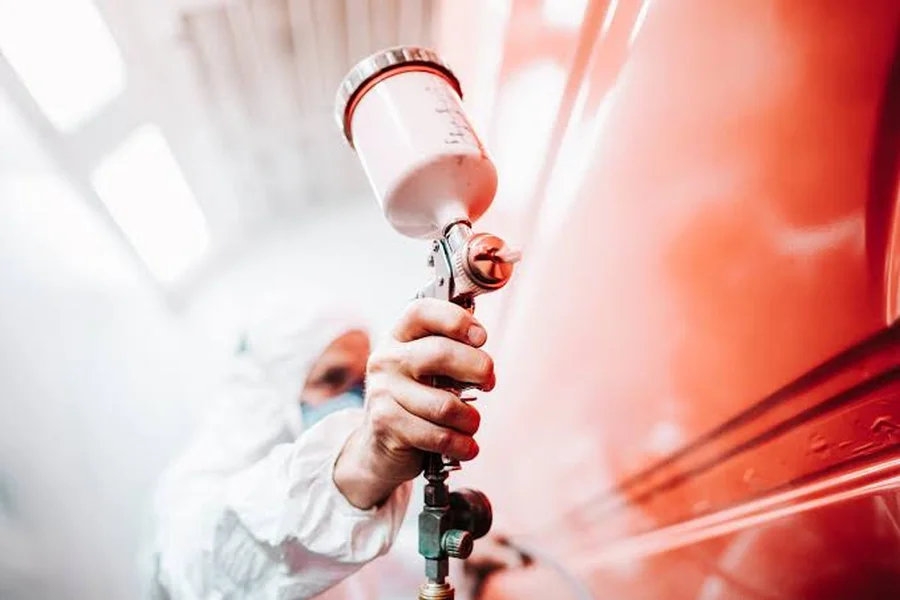

Your car’s paint is not just color. It’s a five-layer engineered system, and if any single layer goes wrong, the whole repair fails visually and structurally. Most drivers don’t realize this until they pick up a vehicle from a cheap shop and notice the fender looks a slightly different shade in direct sunlight. That moment of frustration is the result of skipping science.
Auto body refinishing has evolved dramatically over the past decade. New materials, tighter environmental rules, and the rise of aluminum-intensive vehicles have turned what once seemed like a straightforward spray job into a discipline that demands chemistry knowledge, calibrated equipment, and formal certification. Here’s what’s actually going on under that glossy surface.
The Five-Layer Paint System Explained
Factory paint jobs don’t happen in one coat. They follow a precise sequence, and collision repair shops that want to match factory results have to replicate every step.
It starts with the substrate prep, where bare metal or repaired panels get cleaned and treated to prevent corrosion. Then comes primer, which fills surface imperfections and creates a bonding surface. A sealer goes on next, locking out moisture and creating a neutral base that prevents bleed-through. The base coat carries the actual color, and a clear coat goes on last to protect everything underneath while delivering that mirror-like gloss. After curing, color-sanding and machine buffing eliminate any remaining texture or orange peel.
Every one of those stages has variables. Cure times shift based on ambient temperature. Humidity affects how a base coat lays down. Spray pressure influences metallic flake orientation, which is exactly why a pearlescent or metallic finish can look different depending on the viewing angle if the technician doesn’t dial in the application correctly. Skipping a stage or rushing through it produces a repair you can spot from 10 feet away.
Aluminum Changes Everything for Body Shops
Steel was the default material for vehicle body panels for most of automotive history. Aluminum changes the repair picture entirely, and it’s showing up in more vehicles every year.
According to a 2023 outlook report from the Aluminum Association, aluminum content per vehicle is expected to reach approximately 550 pounds by 2030, a 233% increase over 1990 levels. Brands like BMW, Audi, Mercedes-Benz, Tesla, Jaguar, and Infiniti already rely heavily on aluminum body panels and structural components.
Why does that matter for paint and body repair? Aluminum behaves differently from steel in almost every repair scenario. It doesn’t spring back the same way after an impact. It work-hardens when you try to straighten it incorrectly, meaning you can actually make the damage worse. And because aluminum and steel can cause galvanic corrosion when they contact each other, technicians have to use dedicated, aluminum-only tools to prevent cross-contamination during repairs. A shop that uses the same hammer and dolly set on an aluminum door that they used on a steel quarter panel the same afternoon is setting up a rust problem that won’t show up for months.
The painting process on aluminum also requires attention to the specific alloy. Certain primers adhere differently depending on whether the panel is 5xxx or 6xxx series aluminum. That’s not guesswork territory. It’s why factory certification for aluminum repairs is a meaningful credential, not a marketing label.
Waterborne Paints and the Shift Away from Solvent-Based Systems
If you’ve had a car painted in the last several years, there’s a good chance the shop used waterborne base coat technology. The shift from solvent-based to waterborne paints has reshaped the refinishing industry, and it wasn’t optional.
VOC emissions in the auto body industry fall under the EPA’s National Volatile Organic Compound Emission Standards for Automotive Refinish Coating, and the EPA’s Collision Repair Campaign exists specifically to help shops reduce their exposure to toxic air emissions and work toward full compliance.
Waterborne paints use water as the primary carrier instead of solvents, which dramatically reduces the volatile organic compounds released during application and curing. The tradeoff is that they behave differently in the spray booth. They’re more sensitive to humidity and air movement. Technicians need to understand how to properly flash each coat before applying the next one. Done right, waterborne systems actually produce superior results: better metallic flake orientation, more accurate color matching, and smoother overall surface texture.
“There is consensus that waterborne paints provide a superior color match and have better metallic lay-down on autobody surfaces,” according to research summarized by the Pacific Northwest Pollution Prevention Resource Center, which has tracked the transition from solvent-based systems across the collision repair industry for years.
For the car owner, this means the shop you choose needs current equipment and trained technicians who understand waterborne application. An older shop still set up for solvent-based work and trying to run waterborne products through the same guns and booths will struggle to get consistent results.
The Color-Matching Problem No One Talks About
Modern vehicle colors are designed to shift in appearance depending on the light source and viewing angle. A BMW Individual finish or a Mercedes AMG-specific paint formulation can contain seven or more layers with specialty pigments, including color-shifting pearls and thermochromic particles. Matching those finishes after a collision requires spectrophotometer readings, computerized paint mixing, and test sprays on physical panels before touching the car.
The North American automotive paint market, valued at $3.91 billion in 2024, is projected to reach $5.57 billion by 2033, growing at a 4% CAGR according to a 2025 market analysis, with consumer demand for customized and premium finishes cited as a primary growth driver. That demand is exactly why color-matching technology has become so critical. Drivers are more aware of their vehicle’s appearance than ever, and tolerance for a slightly-off repair is essentially zero.
Shops that invest in spectrophotometer technology and maintain updated formula libraries have a clear advantage here. Formulas shift over time as paint manufacturers update their mixing systems, so a shop pulling a three-year-old formula for a current model year vehicle is already starting from the wrong place.
How to Choose a Shop That Can Actually Handle Your Car
Here’s a practical four-part framework I’d use when a luxury or aluminum-intensive vehicle needs body and paint work. Think of it as the Certification, Materials, Process, and Proof model.
- Certification: Confirm the shop holds OEM certification for your brand. BMW, Lexus, Infiniti, and Mercedes-Benz all run formal authorization programs. A certified shop has completed brand-specific training and uses the approved repair processes.
- Materials: Ask whether they use OEM or approved equivalent parts and whether they work with waterborne base coat systems. If they can’t answer those questions directly, that’s your answer.
- Process: A credible shop can walk you through their paint process from substrate prep to final buffing. If the explanation stops at “we spray it and it looks great,” keep looking.
- Proof: Ask for before-and-after photos of similar repairs. A shop that does this work well is proud to show it.
If you’re in the Phoenix metro area and driving a luxury vehicle, quality matters just as much as convenience. Shops specializing in paint and body repair Scottsdale Arizona that hold actual OEM certifications for aluminum-capable repairs are the ones worth calling, not the closest shop on the block.
The Bottom Line
Modern auto body paint is a precision trade, not a commodity service. Aluminum substrates, waterborne chemistry, spectrophotometer color matching, and multi-layer application processes have raised the bar significantly in the past decade. The driver who treats a body shop like a commodity purchase often ends up back in the parking lot squinting at a panel that doesn’t quite match. Your car deserves a shop that treats the paint job like the engineered system it actually is. Will you know the right questions to ask when the time comes?