

The porch light is on, but your guest still slows down halfway up the driveway. They can see the front door. What they cannot see clearly is where to leave the car, where the lawn begins, or whether the narrow strip beside the garage leads to the entrance. You watch from inside as they take a few uncertain steps, then reach for their phone’s flashlight.
Turning up the porch light rarely fixes this. It makes the doorway brighter while leaving the rest of the approach much as it was. A better place to start is outside the house: at the points where someone arriving for the first time has to decide which way to go.
Walk In From the Street
Homeowners usually judge outdoor lighting while standing near the front door. Visitors see the property in the opposite order. They find the driveway entrance first, then look for a place to stop, then work out how to reach the door. Each part of that short journey needs to make sense.
Go outside after dark and approach your home as a visitor would. Pay attention to where you hesitate. Perhaps the driveway curves behind a hedge, or the walkway branches away from the garage more quietly than you realised. Mark those places before deciding how many lights to buy. A fixture at a useful turning point often does more than a row of lights placed at equal intervals.
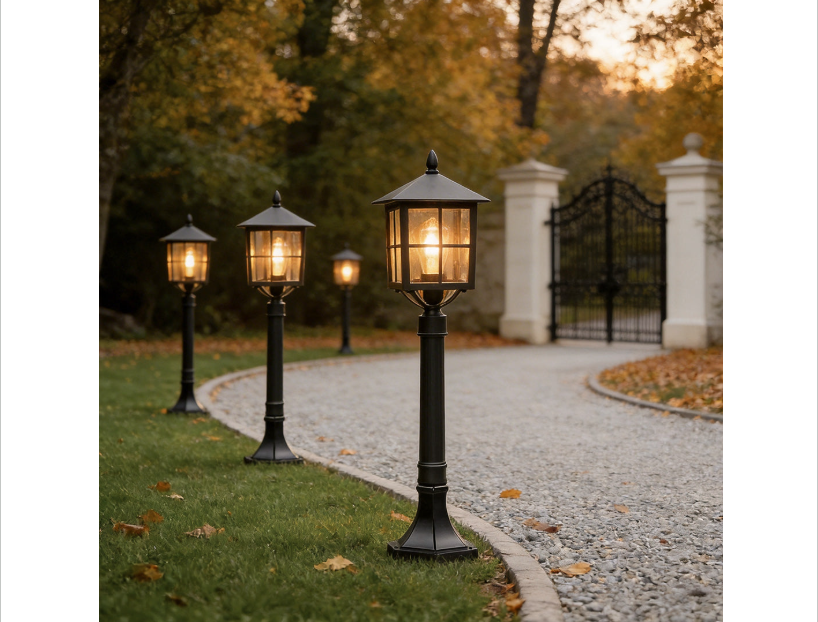
A light beside the driveway can help a visitor read its edge before they reach the house.
Give the Driveway an Edge
A driveway can be surprisingly hard to judge at night, particularly when dark paving meets a dark lawn. The difficulty is greater when someone is backing out, opening a car door, or walking around a parked vehicle with a bag in each hand. Lighting the entire surface is usually unnecessary. Showing its boundaries and the route toward the house is more useful.
This is a good role for post lights. Placed near a driveway entrance, a change of direction, or the start of a walkway, they provide visible reference points from farther away than very low garden lights. Styles range from restrained modern posts to lantern forms that suit a more traditional exterior.
Before choosing a height, consider where the light will be seen from a car. A glowing head at eye level can be distracting when a driver turns into the property. A fixture with a shielded or downward-directed light source may make the driveway edge easier to read without shining into someone’s face. Look at the proposed position from both directions of travel, not just from the house.
Make the Turn Toward the Door Obvious
The most confusing part of an arrival is often the last twenty feet. The driveway is clear, the porch is bright, but the path connecting them disappears into a planting bed. A post light near that turn can act as a quiet marker. It says, in effect, “the way in starts here.”
Resist the urge to put matching fixtures on both sides of every section. In a modest front yard, that can make the lights more noticeable than the house. Instead, use one to identify the turn, then judge whether the route itself needs another point of light. If nearby windows, the porch, and reflected light already reveal the paving, you may need less than you expected.
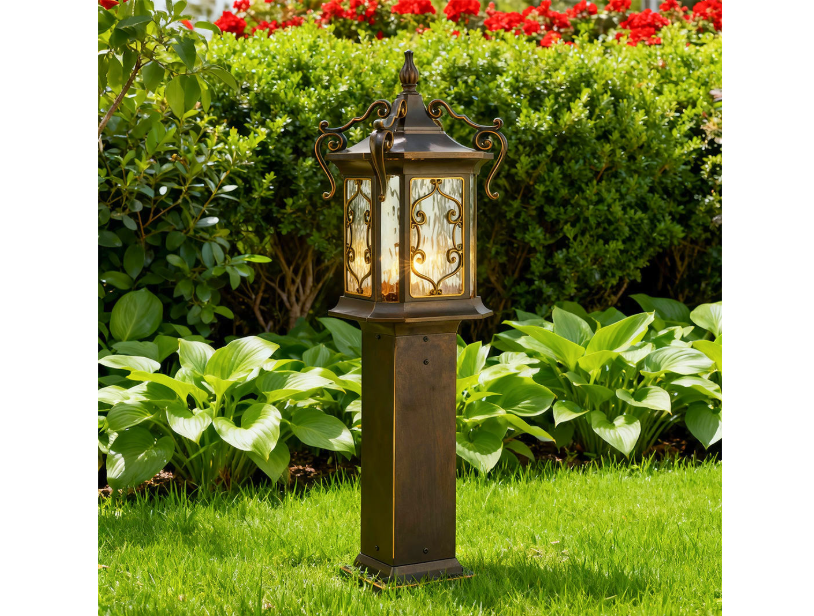
Plants complicate this plan in a way product photos seldom show. A small shrub can grow across a light’s beam, and summer foliage can hide a fixture that was plainly visible in winter. Leave space for mature planting. Think, too, about who trims the border and where a lawn mower or wheelbarrow needs to pass.
Check the View From Inside
Outdoor lights affect the rooms behind them. A post light that looks pleasant from the sidewalk may shine through a living room window or draw attention in a bedroom after everyone has gone to bed. Stand at the main windows before settling on a location. If you can see an exposed bulb from the sofa, the fixture may become tiresome long before its finish wears out.
Neighbours have the same problem from the other side of a property line. Position and shielding matter more than simply choosing a dimmer bulb. Light directed toward the driveway and walking surface helps people arrive; light spilling into adjacent windows serves little purpose.
Warm light often sits comfortably beside brick, timber, plants, and the light coming from a home’s windows. More important than a particular colour temperature is consistency. A cool white post light beside a very warm porch lantern can make the approach feel disconnected, even if each fixture looks good on its own.
Try the Layout Before Installing It
You can learn a great deal with a flashlight and a few temporary markers. Put a garden stake or an upside-down flowerpot at each proposed location. After dark, hold the flashlight near the planned height and aim it in the direction the fixture would illuminate. Then have someone walk from the street to the door while you watch from the driveway and from inside.
Notice whether the next destination becomes clear before they reach the current light. If they pause at the garage corner, that spot needs attention. If one proposed fixture adds brightness without helping them choose a direction, consider leaving it out. The test costs nothing and is much easier than moving a wired post later.
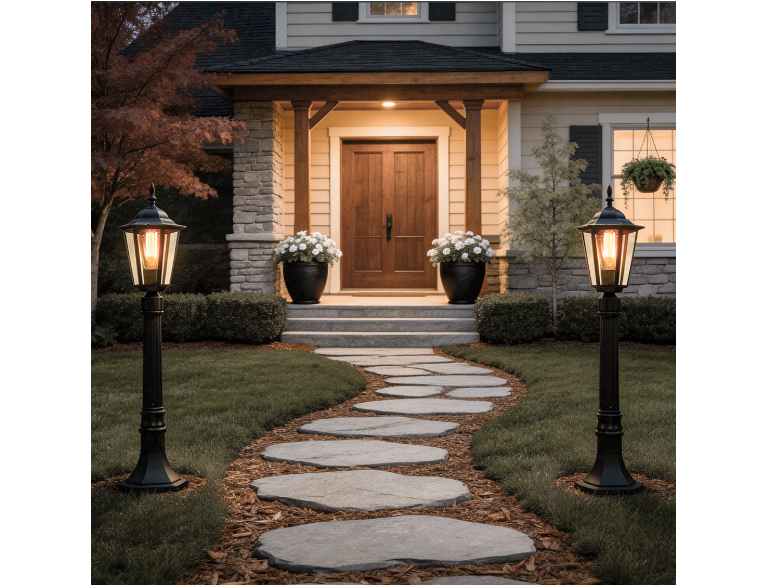
The entrance should become clear as a visitor leaves the driveway and approaches the door.
Before installation, check the fixture’s outdoor rating, mounting requirements, power supply, and access for maintenance. A solar model needs a suitable charging location; a hardwired model needs a properly planned electrical connection. Neither detail should be an afterthought once the planting and paving are finished.
When the layout works, a visitor does not have to admire the lighting to benefit from it. They pull in, find the walkway, and reach the door without stopping to puzzle over the route. The porch light can finally do its own job: welcome them when they arrive.